
AC System Comparison for Michigan Homes
A cooling system that looks efficient on paper can still leave upstairs bedrooms warm, run longer than expected, or add unnecessary cost if it does not match the home. A thoughtful AC system comparison gives Michigan homeowners a clearer way to evaluate comfort, energy use, installation requirements, and long-term value before committing to equipment.
The best choice is rarely just the unit with the highest efficiency rating. Your home’s layout, insulation, ductwork, heating equipment, remodeling plans, and family comfort preferences all affect what will perform well. The right system should keep your home comfortable through humid summers while supporting dependable year-round climate control.
AC System Comparison: Start With the Home
Before comparing brands, sizes, or features, start with the conditions inside the house. A properly designed residential HVAC system is matched to the home, not selected by square footage alone.
A newer, well-insulated home with quality windows may need less cooling capacity than an older home of the same size. A two-story home with large west-facing windows may need a different air-distribution strategy than a single-level ranch. Finished basements, additions, vaulted ceilings, and rooms over garages can all change the load on the system.
For a replacement, the size of the existing AC is useful information, but it should not be treated as the final answer. The prior system may have been oversized, undersized, or installed before updates such as new windows, added insulation, or a finished living area. Professional load calculations help determine the capacity and airflow your home actually needs.
Central Air Conditioning vs. Heat Pumps
For many Michigan homes, the first decision is whether to install a conventional central air conditioner or an air-source heat pump. Both can provide effective summer cooling. Their difference is what they do when temperatures drop.
Central Air Conditioners
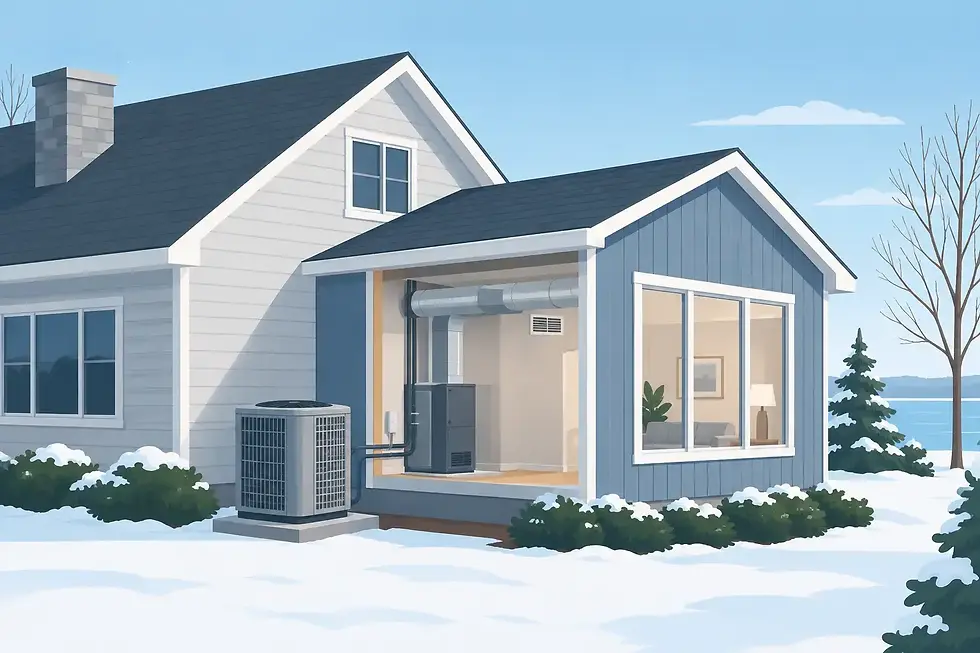
A central air conditioner moves heat from inside the home to the outdoors. It works with an indoor coil, blower, ductwork, and typically a gas furnace. The furnace handles heating in fall and winter, while the AC handles cooling and humidity control during warmer months.
This arrangement is a familiar, dependable fit for homes that already have a furnace and usable ducts. If the furnace is in good condition and the goal is a straightforward cooling upgrade, a central AC system can be a practical option. It can also make sense when budget priorities favor replacing only the equipment that has reached the end of its service life.
The trade-off is that the system does not provide electric heating. Your home will continue to rely on the furnace whenever heat is needed.
Air-Source Heat Pumps
A heat pump cools the home in summer much like an air conditioner. In heating mode, it reverses the process and moves heat from outdoor air into the home. Modern cold-climate heat pumps can provide useful, efficient heat through much of a Michigan winter.
For homeowners replacing both heating and cooling equipment, a heat pump deserves serious consideration. It can reduce reliance on gas during milder weather and provide highly efficient cooling in summer. Many homes pair a heat pump with a gas furnace as a dual-fuel system. The heat pump handles much of the heating season, while the furnace takes over during colder conditions when it is the more effective source of heat.
A heat pump is not automatically the right answer for every home. Equipment cost, electrical capacity, duct condition, utility rates, and your preferred backup heat source all matter. The value comes from designing the complete system around how the home is used, not from choosing a technology based on a label alone.
Ductless and Ducted Mini-Split Options
Homes without existing ducts, room additions, finished attics, and remodeling projects often require a different approach. Ductless mini-splits use a compact outdoor unit connected to one or more indoor air handlers. Each indoor unit can cool, and often heat, a specific area.
This setup avoids the need to extend large duct runs through difficult spaces. It can be an excellent solution for a new addition that always feels warmer than the rest of the home, a converted garage, or an older house where installing ducts would require extensive construction.
Ducted mini-splits provide another option. They use smaller, concealed duct systems and can serve a portion of the home with a cleaner appearance than wall-mounted indoor units. They are often useful when remodeling creates a distinct comfort zone but full-size ductwork is impractical.
The main advantage of mini-split systems is room-by-room control. The trade-off is that multi-zone designs require careful planning. Indoor unit placement, condensate drainage, electrical work, and outdoor-unit location all affect performance and appearance. In a whole-home project, a central system may still be simpler and more cost-effective when existing ducts are in good condition.
Efficiency Ratings That Matter
Cooling efficiency is commonly measured by SEER2, or Seasonal Energy Efficiency Ratio 2. Higher SEER2 equipment uses less electricity over a typical cooling season than lower-rated equipment of similar capacity. However, the highest rating is not always the best investment.
A higher-efficiency system can be especially worthwhile when your AC runs heavily, electricity costs are a concern, or you plan to remain in the home for many years. These systems may also offer features that improve everyday comfort, such as variable-speed operation and better humidity control.
For a home that is only lightly cooled, or for a property with major duct leakage or insulation issues, the jump to premium equipment may not deliver the expected return until those underlying concerns are addressed. Proper installation has a direct effect on real-world efficiency. Refrigerant charge, airflow, duct sealing, and thermostat setup must all be correct for the system to perform as designed.
Single-Stage, Two-Stage, and Variable-Speed Cooling
Single-stage AC systems run at full capacity whenever they are on. They are generally the most budget-friendly choice and can work well in smaller homes or homes with modest cooling demands.
Two-stage systems can operate at a lower level for much of the season, then use full capacity during hotter weather. Longer, lower-output cycles can support more even temperatures and improved moisture removal.
Variable-speed systems make smaller adjustments based on the home’s conditions. They are often the strongest option for consistent comfort, quiet operation, and humidity management. They also carry a higher upfront investment. Whether that added cost makes sense depends on your comfort priorities, home design, and expected length of ownership.
Do Not Overlook Ductwork and Airflow
An excellent outdoor unit cannot compensate for ductwork that is undersized, disconnected, poorly sealed, or incorrectly balanced. In fact, airflow issues are a common reason a new AC system fails to feel like an upgrade.
During a system changeout, the duct system should be evaluated along with the equipment. Supply and return ducts need to move the right amount of air. Rooms that consistently run warm may need a duct modification, additional return air, balancing adjustments, or a zoning strategy. A new thermostat alone will not fix a room that is not receiving adequate airflow.
For remodels and new construction, duct planning should happen early. HVAC routes affect framing, ceiling height, closet space, and mechanical-room design. Planning ahead makes it easier to protect both the home’s appearance and its comfort.
Choosing the Right AC System for Your Project
A replacement project often focuses on reliability, efficiency, and compatibility with existing ducts and heating equipment. A remodel may call for targeted solutions in newly finished or expanded spaces. New construction provides the broadest opportunity to design ductwork, equipment location, zoning, and controls around the home from the start.
In every case, ask how the system will address the comfort concerns that prompted the project. If the concern is high summer humidity, equipment staging and runtime matter. If it is an upstairs that never cools down, airflow and zoning may matter more than a higher efficiency rating. If you are replacing an aging furnace and AC at once, comparing a conventional system with a dual-fuel heat pump setup can provide a more complete picture of operating costs and comfort.
A clear proposal should explain the recommended equipment, capacity, efficiency level, installation scope, and any duct or electrical work required. That gives you a meaningful comparison between options instead of a decision based only on the lowest initial price.
The right cooling system should feel simple once it is installed: steady temperatures, manageable energy use, and confidence that your home is prepared for the next Michigan summer. Four Seasons Heating & Cooling can help turn the technical choices into a system plan built around your home, your project, and the comfort you expect.


Comments