
Heat Pump Reliability for Michigan Homes
A heat pump has to do more than keep up on a mild fall day. In Michigan, it must provide steady comfort through freezing temperatures, spring rain, humid summers, and sudden weather swings. That is why heat pump reliability is less about a single brand name and more about whether the system was selected, designed, and installed for the home it serves.
For homeowners replacing an aging furnace and air conditioner, planning a remodel, or building a new home, a properly designed heat pump can be a dependable, efficient source of year-round comfort. The key is understanding what makes one system perform consistently while another struggles.
What Heat Pump Reliability Really Means
Reliability does not mean a heat pump will never need service. Like any mechanical system, it has electrical components, motors, refrigerant controls, and moving parts that need occasional attention. A reliable system is one that delivers expected heating and cooling, handles normal seasonal demands, operates efficiently, and can be serviced when needed.
For a Michigan household, reliability also means the equipment can manage cold weather without leaving the home uncomfortable. Modern cold-climate heat pumps can continue producing useful heat well below freezing, but their performance varies by model, capacity, home design, and installation quality. On the coldest days, some homes may use electric backup heat or a dual-fuel system with a furnace. That is not a failure of the heat pump. It is part of a climate-control plan built around local conditions and the homeowner’s comfort goals.
A reliable system should feel predictable. Rooms should heat and cool evenly, operating sounds should be normal and consistent, and utility use should align with the home’s size, insulation, thermostat settings, and weather conditions.
The Biggest Factors Behind Heat Pump Reliability
Proper sizing comes first
A heat pump cannot be chosen by square footage alone. Window area, insulation levels, air leakage, ceiling height, floor plan, sun exposure, and the home’s existing ductwork all affect the heating and cooling load. A professional load calculation gives the installer a much clearer picture of what the home actually needs.
An oversized unit may heat or cool quickly, but short cycles can create uneven temperatures, reduce humidity control in summer, and add unnecessary wear. An undersized unit may run for long periods and have difficulty maintaining comfort during severe weather. The right capacity supports steady operation, which is generally easier on the equipment and more comfortable for the household.
This matters especially during remodels. Adding a finished basement, sunroom, primary suite, or open-concept addition can change the home’s heating and cooling needs. Keeping the old equipment size without evaluating the updated layout can limit reliability from day one.
Cold-climate equipment is not interchangeable
Not every heat pump is intended to deliver the same level of heating output in cold weather. Homeowners should ask how a proposed model performs at lower outdoor temperatures, not only its cooling efficiency rating.
A cold-climate design may offer stronger low-temperature capacity and variable-speed operation that adjusts output as conditions change. These systems can provide stable indoor temperatures across much of the heating season. However, the best choice depends on the home and the project. A home with an existing gas furnace may benefit from a dual-fuel setup, while a well-insulated new build may be an excellent candidate for an all-electric heat pump system.
The most dependable choice is the one matched to the home’s envelope, available utilities, duct system, budget, and comfort expectations.
Installation quality affects every season
Even excellent equipment can underperform when installation details are overlooked. Refrigerant charge, electrical connections, condensate drainage, airflow, duct sealing, and thermostat setup all influence reliability.
Airflow deserves particular attention. If supply and return ducts are too small, poorly connected, leaking, or restricted, the system cannot move conditioned air effectively. The heat pump may work harder than necessary, rooms may feel uneven, and components may face additional stress. In a replacement project, existing ductwork should be evaluated rather than assumed to be compatible with new equipment.
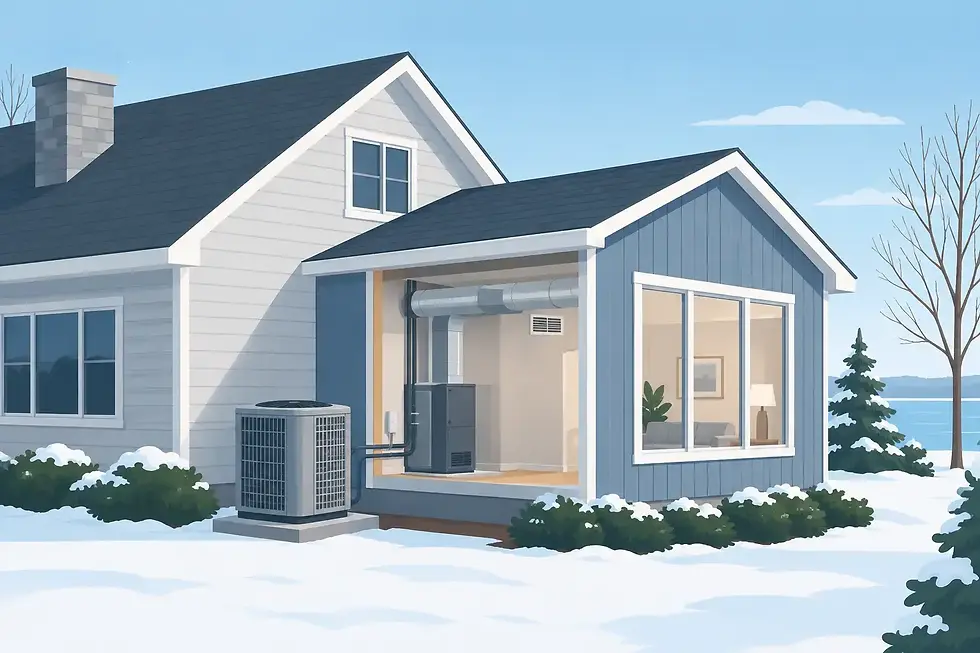
Outdoor unit placement also matters. The unit needs adequate clearance for airflow and service access. In Michigan, thoughtful placement can help reduce exposure to drifting snow, roof runoff, and ice buildup. It should sit on a stable base and be positioned so defrost water can drain appropriately.
Heat Pump Reliability in Winter
A common concern is whether a heat pump can be trusted when temperatures fall below freezing. The answer depends on the system design, but cold weather operation is normal for equipment designed for it.
During heating mode, the outdoor coil collects heat from the outside air. Frost can form on that coil when conditions are cold and damp. The system periodically enters a defrost cycle to clear the frost. Homeowners may notice a temporary change in sound, outdoor steam, or a brief pause in warm air delivery. These are usually normal signs that the unit is protecting its performance.
What is not normal is heavy ice that remains in place, frequent unexplained shutdowns, unusually loud mechanical sounds, or a home that cannot maintain the thermostat setting under ordinary winter conditions. Those signs call for professional evaluation.
Backup heat also needs to be understood before installation. Electric heat strips can provide supplemental heat when needed, but they use more electricity than the heat pump itself. A dual-fuel system can switch to a furnace at a selected outdoor temperature. Neither approach is automatically better. The best strategy depends on the equipment, energy costs, and how the home performs in cold weather.
Maintenance That Supports Long-Term Performance
Heat pumps need consistent, straightforward maintenance. Homeowners can make a meaningful difference by replacing or cleaning filters on schedule, keeping supply and return vents open, and clearing leaves, grass, and debris from around the outdoor unit. In winter, snow should be gently cleared away from the unit without damaging the coil or fan.
Professional maintenance remains valuable because a technician can inspect electrical components, verify refrigerant performance, check drainage, evaluate airflow, clean coils as needed, and identify developing issues before they become a no-heat or no-cooling call.
A practical maintenance schedule includes a professional visit before heavy heating use and another before peak cooling season, particularly for systems that operate year-round. The system may not require major work at every appointment, but regular inspection helps protect efficiency and reliability over its service life.
Signs a Heat Pump May Need Attention
A heat pump should not be ignored simply because it is still running. Changes in performance often provide an early warning that adjustment or repair is needed. Watch for uneven room temperatures, rising energy bills without a clear weather-related reason, repeated thermostat changes to stay comfortable, short cycling, weak airflow, or water collecting where it should not.
Unusual noise is another reason to schedule service. A brief change in sound during defrost may be expected, but grinding, banging, persistent rattling, or loud vibration should be checked. If the system is blowing cool air during heating mode for an extended period, frequently tripping breakers, or showing error codes, it needs prompt professional diagnosis.
Addressing small issues early can prevent additional wear on other components. It also gives the homeowner a clearer choice between a focused repair and a planned equipment upgrade.
Choosing Reliability During a Replacement or New Build
The most reliable heat pump installation begins before equipment arrives at the home. Homeowners should expect a contractor to ask about their current comfort problems, insulation, window upgrades, room additions, energy priorities, and plans for the property. Those details help shape a solution instead of treating every house as the same.
For a changeout, the question is not simply, “What size was the old system?” Older equipment may have been oversized, and the home may have changed since it was installed. For new construction, HVAC planning should be coordinated with the home’s layout and building envelope. For a remodel, the added space and altered airflow patterns deserve their own evaluation.
Four Seasons Heating & Cooling approaches residential HVAC projects with that full-home perspective, helping homeowners select efficient equipment and installation details that support dependable comfort through every season.
The right heat pump should fit the house, the weather, and the way your family lives. Start with a careful design, keep up with routine care, and you can move forward with greater confidence that your home will stay comfortable when Michigan weather changes its mind.


Comments