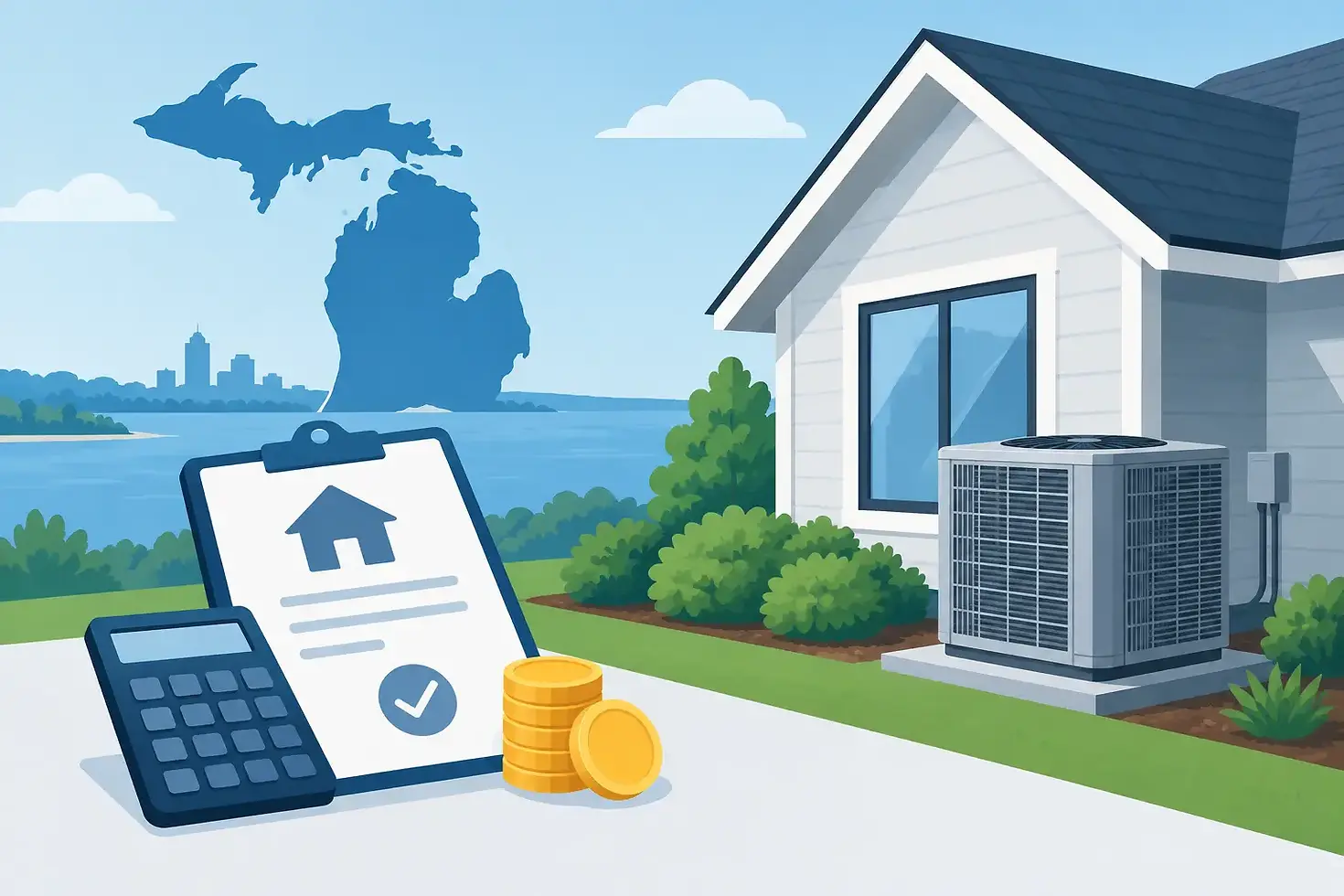
HVAC Financing Options for Michigan Homes
A furnace that quits during a Michigan cold snap or an air conditioner that cannot keep up in July rarely fails at a convenient time. HVAC financing can help homeowners move forward with a needed replacement, new-construction installation, or remodel upgrade without delaying the comfort, safety, and efficiency their home needs.
The right financing arrangement is not simply the one with the lowest monthly payment. It should fit the scope of the project, your household budget, and the long-term value of the equipment being installed. A properly designed high-efficiency system can serve your home for many years, so it makes sense to look at the complete cost of ownership rather than the first invoice alone.
When HVAC Financing Makes Sense
Financing is often worth considering when a system replacement is unexpected. Continuing to repair aging equipment may feel less expensive in the moment, but repeated repair costs, uneven temperatures, higher utility use, and the possibility of another breakdown can change the equation quickly. Replacing a failing system before it becomes an emergency gives you more time to compare equipment and payment options.
It can also be a practical choice for planned projects. A homeowner building a new home may want to preserve cash for other construction expenses. During a remodel, changes to insulation, room layout, windows, or square footage can require a new approach to heating and cooling. Financing can help keep the HVAC portion of the project aligned with the overall renovation schedule instead of forcing compromises on equipment selection.
For some households, paying in full is still the simplest option. If doing so does not reduce emergency savings or interfere with other priorities, it avoids interest charges. Financing may be more useful when it allows you to choose properly sized, efficient equipment now while keeping reserves available for the rest of the home.
How HVAC Financing Typically Works
Most HVAC financing is offered through a third-party lending partner. After receiving a project quote, homeowners can apply for a financing plan and, if approved, select available terms. Approval, interest rate, loan amount, and repayment period depend on the lender and the applicant's credit profile.
Some plans use a fixed interest rate and fixed monthly payment. This structure is straightforward because you know what you will pay each month and when the balance will be paid off. Other offers may include a promotional period, such as deferred interest or a reduced annual percentage rate for a limited time. These can be useful, but they require careful reading.
Deferred-interest offers deserve particular attention. If the full promotional balance is not paid before the period ends, interest may be charged retroactively from the original purchase date, depending on the agreement. A low payment shown on an offer may not be enough to clear the balance before that deadline. Before choosing this type of plan, calculate the payment needed to pay it off in time and make sure it fits comfortably within your budget.
A reputable residential HVAC contractor should provide a clear project quote before you make a financing decision. The quote should identify the equipment, installation work, and any included accessories or modifications. Financing should support a well-defined comfort solution, not make an unclear proposal look more affordable.
Questions to Ask Before You Apply
Ask for the total installed price, not only the estimated monthly payment. Then ask whether there are financing fees, prepayment penalties, or promotional conditions. You should also understand whether the payment changes over time and what happens if a payment is late.
It is equally helpful to ask which parts of the work are included. A complete system changeout may involve more than setting new equipment in place. Depending on the home, the project can include electrical updates, condensate drainage, thermostat installation, ductwork adjustments, venting, or removal of old equipment. Knowing the complete scope helps prevent surprises after financing has been arranged.
Compare the Total Cost, Not Just the Monthly Payment
A longer loan term generally produces a lower monthly payment, but it can increase the total amount paid in interest. A shorter term may cost more each month while reducing the overall financing expense. Neither choice is automatically better. The right fit depends on how much room your household has in its monthly budget and whether you can make extra payments when possible.
For example, two financing plans may make the same installation appear equally attainable. One may offer a smaller payment over a longer period, while the other has a higher payment and substantially lower total interest. Looking at the annual percentage rate, repayment term, and total of payments makes the comparison more meaningful.
Efficiency should also be part of the decision. A high-efficiency furnace, air conditioner, or heat pump may have a higher upfront cost than basic equipment, but proper selection can reduce energy waste and improve comfort. Savings vary by home, weather, utility rates, insulation levels, thermostat settings, and how the system is installed. They should not be treated as a guaranteed way to offset a loan payment. Still, choosing equipment that fits the home's actual needs can provide better value over the life of the system.
HVAC Financing for Replacements, Remodels, and New Homes
A replacement project often has the most immediate need. When old equipment is unreliable, financing can allow you to replace it with a properly sized system rather than choosing the quickest available option. That matters in Michigan, where heating performance, airflow, and dependable operation have a direct effect on daily comfort.
For remodels, the best solution may not be a simple equipment swap. An addition, finished basement, open floor plan, or major insulation upgrade changes how the home gains and loses heat. Financing can help support a project-specific design that accounts for those changes, including equipment capacity, ductwork needs, and zoning considerations when appropriate.
New construction allows the greatest opportunity to plan for long-term performance. The HVAC system should be designed around the home, not selected as an afterthought. Builders and homeowners can use financing strategically to keep the project moving while investing in equipment and installation details that support efficient year-round climate control.
Avoid These Common Financing Mistakes
Do not select a system based only on the payment that appears easiest today. A low payment can conceal a long repayment period, high interest costs, or a promotion with conditions that are difficult to meet. Review the agreement before signing, and keep copies of the loan terms and project proposal.
Avoid skipping the system-design conversation, too. Oversized equipment can cycle on and off too frequently, while undersized equipment may struggle during extreme weather. Financing a system that is not suited to the home is still a costly decision. An expert contractor should consider the home's layout, existing equipment, comfort concerns, and project goals before recommending a solution.
Finally, do not assume every upgrade has the same return. A variable-speed system, smart thermostat, indoor air quality accessory, or ductwork improvement may be worthwhile, but the value depends on your home and priorities. Ask how each recommendation contributes to comfort, efficiency, reliability, or control. Clear answers make it easier to decide which improvements belong in the financed project.
Frequently Asked Questions About HVAC Financing
Does financing cover the full HVAC installation?
That depends on the lender's approved amount and the contractor's project scope. In many cases, homeowners can finance most or all of an eligible installation, including equipment and related work. Review the quote and financing agreement to confirm what is covered.
Will applying for financing affect my credit?
Lenders may use a credit check as part of the application process. The type of inquiry and its potential effect on your credit depend on the lender. Ask before applying so you understand the process.
Can I pay off an HVAC loan early?
Many financing plans allow early payoff, but you should verify this before accepting the terms. Ask whether there is a prepayment penalty and whether additional payments are applied directly to the principal balance.
A comfortable home should not have to wait for the perfect moment. Start with a clear, customized HVAC quote, ask direct questions about your payment options, and choose a plan that supports dependable comfort without putting unnecessary pressure on your household budget.

Comments