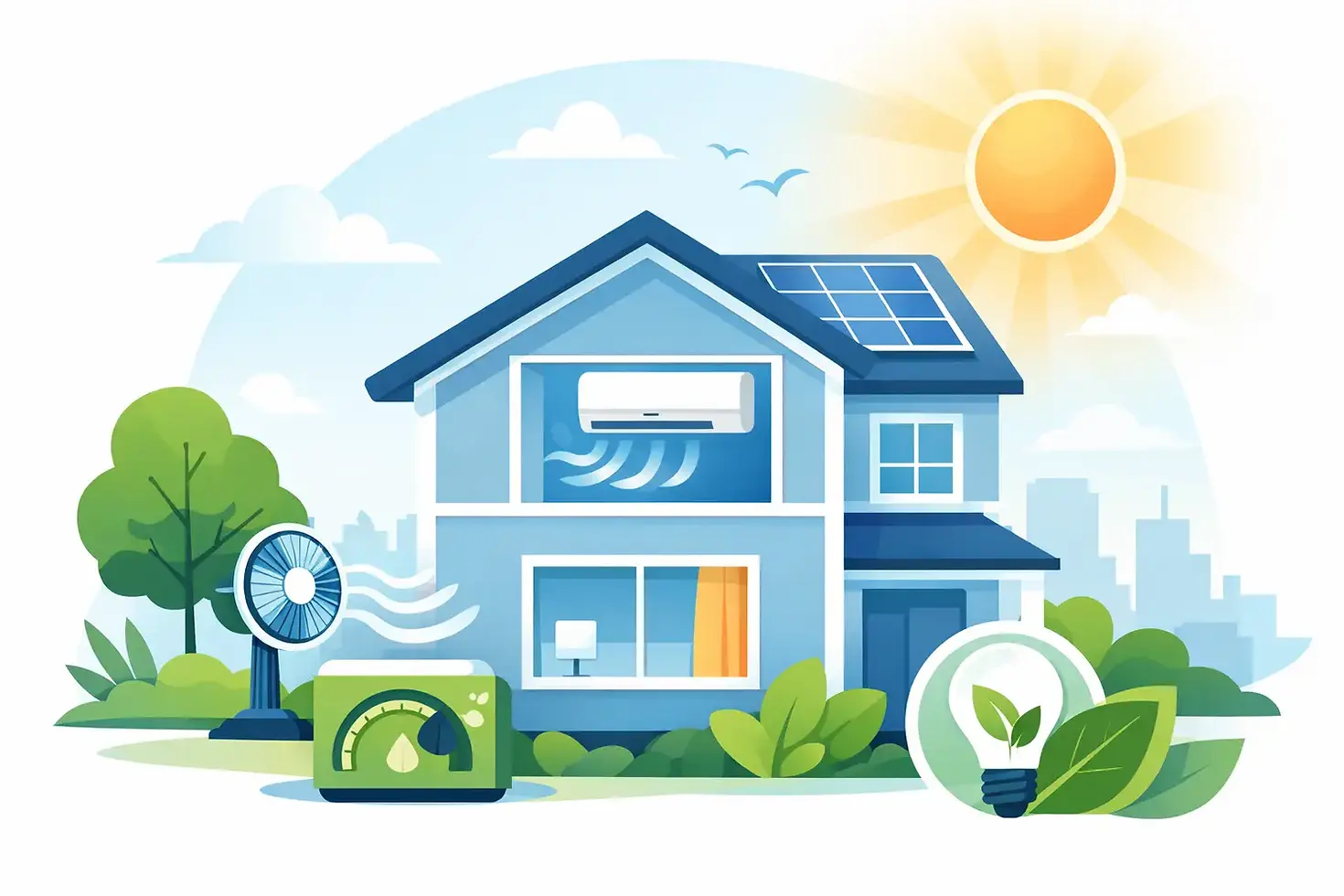
How to Lower Home Cooling Energy Use This Summer
A Michigan summer does not need to leave every upstairs bedroom warm, every thermostat setting low, and every utility bill higher than expected. The best way to lower home cooling energy use is not simply to run the air conditioner less. It is to help the entire home - equipment, ducts, insulation, windows, and daily habits - work together to remove heat efficiently.
For homeowners planning a remodel, replacing an aging system, or building a new home, cooling efficiency should be part of the project from the start. A properly designed solution can improve comfort room by room while reducing the energy wasted by an oversized, undersized, or poorly installed system.
Start With the Temperature You Actually Need
Setting the thermostat extremely low does not cool a home faster. It only asks the system to run longer after the house reaches a comfortable temperature. For many households, a setting around 76 to 78 degrees when home is a practical starting point, though comfort depends on humidity, sunlight, activity, and personal preference.
A programmable or smart thermostat can make that setting easier to maintain. Raise the temperature a few degrees while the house is empty, then schedule it to return to your preferred comfort level before people arrive home. Avoid large setbacks if the home becomes humid during the day or if your system must run for hours to recover. The goal is steady, efficient comfort, not constant temperature swings.
Humidity matters as much as the number on the thermostat. Dry air feels cooler than humid air at the same temperature. If the home feels sticky even when the thermostat is set low, the issue may be limited dehumidification, oversized cooling equipment that shuts off too quickly, or an airflow problem. Lowering the thermostat may mask the problem, but it will not correct it.
Improve the Home Before Asking More of the AC
Your air conditioner can only cool the air that stays inside the home. Heat entering through the attic, sun-facing windows, gaps around doors, and poorly insulated walls increases the load on the system every afternoon.
Start with the simple maintenance items that support airflow. Replace a dirty return-air filter on the schedule recommended for the filter and your household conditions. A home with pets, renovations, or frequent cooking may need more frequent changes. Keep supply registers open and clear of furniture, rugs, and drapes, and make sure the outdoor unit has room for air to move around it. Grass clippings, leaves, and dense shrubs can reduce performance.
Then look at the building envelope. Attic insulation and air sealing are often high-value improvements in homes where upper floors become uncomfortable in summer. Sealing major gaps around attic penetrations, plumbing openings, and recessed fixtures can keep hot attic air from working its way into living spaces. Window coverings can also make a noticeable difference in rooms that receive strong afternoon sun. Close blinds or shades before direct sunlight heats the room, rather than waiting until it already feels warm.
Ceiling fans help when used correctly. They do not lower the air temperature, but their airflow helps occupants feel cooler. In summer, set the fan to rotate counterclockwise and turn it off when the room is empty. Leaving it on in an unoccupied room uses electricity without improving comfort.
Lower Home Cooling Energy Use With Better Airflow
Many cooling complaints are really airflow complaints. A central air conditioner may be operating, but cooled air is not reaching the rooms that need it or is leaking into areas where it does no good.
Leaky ducts can send conditioned air into attics, crawlspaces, basements, or wall cavities. Crushed, disconnected, or undersized ducts can restrict airflow and make certain rooms difficult to cool. In a remodel, ductwork is sometimes extended to serve a new room without confirming whether the existing equipment and duct system can handle the added load. That can create comfort problems throughout the house, not just in the addition.
A professional evaluation should consider more than the condition of the outdoor unit. It should include return-air capacity, supply duct sizing, register placement, insulation around ducts in unconditioned areas, and the balance between floors. Two-story homes often need thoughtful zoning or airflow adjustments because heat naturally rises and upper levels receive more solar gain.
Closing multiple supply vents is rarely a reliable solution. It can increase pressure in the duct system, reduce overall airflow, and cause the equipment to operate outside its intended range. If one area consistently runs warmer, the better answer may be a duct correction, zoning strategy, additional return air, or a properly designed comfort solution for that part of the home.
Choose Equipment That Fits the House
High-efficiency cooling equipment can reduce operating costs, but the label alone does not guarantee lower bills. Proper sizing and installation are just as important as the efficiency rating.
An oversized air conditioner may cool the home quickly, but it can short-cycle. Short cycles use more energy at startup, create uneven temperatures, and may not run long enough to remove moisture effectively. An undersized system may run continuously on the hottest days and still fail to maintain comfort. The right capacity should be based on a room-by-room load calculation that accounts for the home’s square footage, insulation, windows, orientation, occupancy, and local climate conditions.
For a replacement, it is worth asking whether the existing system was correctly sized in the first place. Replacing a unit with the same capacity can repeat an old design mistake, especially if insulation, windows, roofing, or the home’s layout have changed since the original installation.
Variable-speed and two-stage systems are often strong options for homeowners who value quieter operation, steadier indoor temperatures, and better humidity control. They can adjust output to match less extreme cooling demands instead of operating only at full capacity. The trade-off is a higher upfront investment, and the value depends on the home, the system design, and how long you plan to live there. A well-installed single-stage system can still provide dependable, efficient comfort when it is properly selected.
Plan Cooling Early in New Builds and Remodels
New construction provides the best opportunity to design efficient comfort into the home. Before walls are closed, the HVAC plan can account for window placement, ceiling heights, insulation levels, room use, and duct routing. This is especially valuable for bonus rooms, finished basements, large open living areas, and bedrooms over garages - spaces that commonly develop temperature differences when climate control is treated as an afterthought.
Remodels deserve the same planning. Adding square footage, opening walls, finishing an attic, or converting a garage changes how the house gains and holds heat. The current system may be capable of serving the revised space, or it may need duct modifications, zoning, a system upgrade, or a separate solution. The answer depends on the project, not a rule of thumb.
Four Seasons Heating & Cooling helps Michigan homeowners evaluate these decisions with residential-focused climate-control planning. The right recommendation should connect equipment choices to the way your home is built, used, and expected to perform through every season.
Protect Efficiency With Routine Service
Even a well-designed system loses efficiency when maintenance is ignored. A professional cooling check can identify issues such as low refrigerant charge, dirty coils, weak electrical components, drainage problems, and airflow restrictions before they become larger repairs or comfort failures.
Homeowners can support that work by keeping filters current, watching for new sounds or reduced airflow, and addressing uneven cooling early. If the system runs longer than usual, struggles during normal heat, or produces noticeably higher bills without a change in household use, it is time to investigate the cause. Waiting until the equipment stops completely usually limits options and adds stress during the hottest part of the season.
Efficient cooling is not about sacrificing comfort to save energy. It is about making sure your home receives the right amount of cooling, in the right places, with as little waste as possible. A thoughtful system evaluation can turn persistent hot rooms and high summer bills into a clear plan for more dependable comfort.

Comments