
Package Unit Versus Split System for Your Home
A package unit versus split system decision is not just about where the equipment sits. It affects how your Michigan home is designed, how easily future service can be performed, and how reliably your family stays comfortable through humid summers and cold winters. The right choice comes from matching the equipment to your home’s layout, existing ductwork, fuel options, and long-term comfort goals.
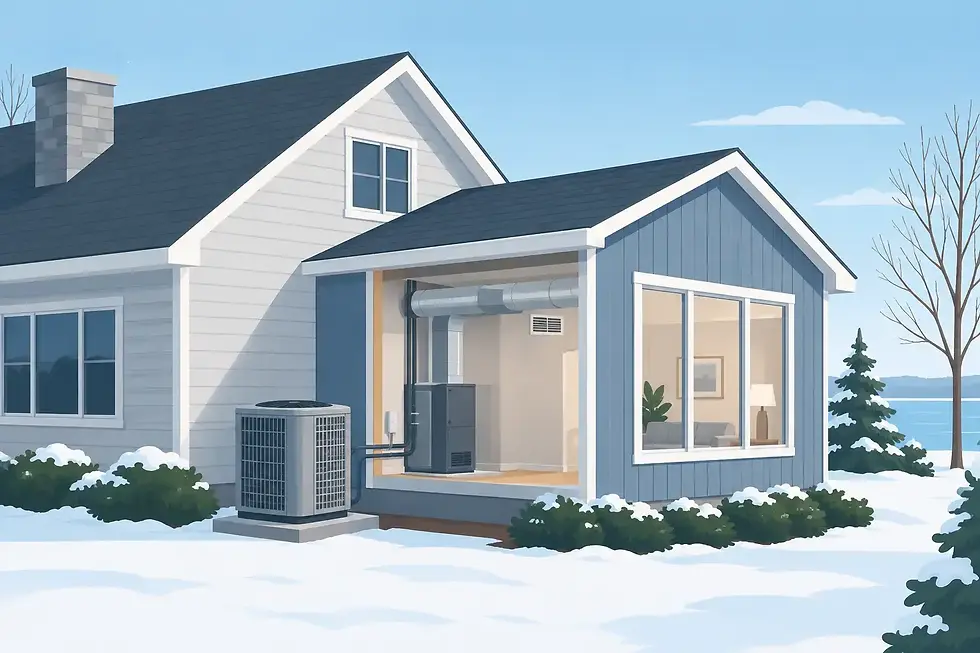
For many homes, a split system is the familiar choice: an outdoor air conditioner or heat pump works with indoor equipment such as a furnace, air handler, or evaporator coil. A packaged unit combines most or all of those components in one outdoor cabinet. Both can provide efficient heating and cooling when properly selected and installed. The best fit depends on the project.
Package Unit Versus Split System: The Core Difference
A split system separates the heating and cooling components. In a typical Michigan setup, the outdoor condenser or heat pump is placed beside the home, while the furnace and indoor coil are located in a basement, utility room, closet, or mechanical area. Refrigerant lines connect the indoor and outdoor portions of the system.
A packaged unit places the major heating and cooling components inside a single weather-resistant cabinet outdoors. Depending on the model, it may combine an air conditioner with a gas furnace, an air conditioner with electric heat, or a heat pump with electric backup heat. Packaged equipment is commonly installed on a ground-level pad, rooftop, or other exterior location with ductwork routed into the home.
The distinction sounds simple, but it changes the way a home uses its interior space and how the HVAC system must be planned. A system that works well for a compact ranch or a remodel with limited mechanical-room space may not be the strongest option for a larger home with a basement and a high-efficiency gas furnace.
When a Split System Makes Sense
Split systems are common in Michigan homes for good reason. They work especially well when the home has a basement, utility area, or designated mechanical room. Keeping the furnace or air handler indoors gives technicians protected access for maintenance and repair, even during winter weather.
A split system also offers flexibility during equipment selection. Homeowners can pair a high-efficiency furnace with an air conditioner, or select a heat pump and compatible backup heat. That flexibility matters when replacing aging equipment, improving comfort in a remodeled area, or planning HVAC for a new home with specific efficiency goals.
For homes using natural gas, a furnace-and-air-conditioner split system remains a practical, dependable configuration. The furnace handles demanding cold-weather heating, while the air conditioner controls summer heat and humidity. A dual-fuel arrangement, which combines a heat pump with a gas furnace, can also be a smart option for homeowners seeking efficient electric heating during milder weather without giving up strong gas heat for deep winter cold.
Split systems do require indoor space. A furnace, coil, drain connection, electrical components, and ductwork all need room for proper installation and future access. In a finished basement or tight utility closet, that footprint can influence the project design.
Advantages to Consider
A split system can provide more equipment combinations and may make future repairs more targeted because the indoor and outdoor sections are separate. It is also often easier to protect the indoor equipment from weather exposure. For many replacement projects, existing ductwork and utility locations already support a split-system layout, which can help keep the installation straightforward.
That does not mean every split system is automatically efficient or quiet. Proper sizing, duct design, airflow settings, refrigerant charging, and installation quality have a major effect on performance. An oversized system can short cycle, while an undersized system may struggle during extreme temperatures.
When a Packaged Unit Is the Better Fit
A packaged unit can be an excellent solution when interior mechanical space is limited or unavailable. It keeps the primary HVAC equipment outside, freeing up room that might otherwise be used for a furnace, air handler, or indoor coil. That can be valuable in certain additions, slab-on-grade homes, smaller homes, or remodeling projects where preserving interior square footage matters.
Because the heating and cooling equipment is contained in one cabinet, installation can be more direct when the home is designed for it. The unit connects to supply and return ducts at the exterior wall or roof location, along with the required electrical, gas, and condensate connections. For the right building layout, this can create a clean, space-conscious solution.
Packaged units also simplify equipment replacement in some existing homes. If the home already has an outdoor packaged system and compatible duct connections, replacing it with a modern high-efficiency model may avoid major interior changes. The project still requires careful evaluation of duct condition, airflow, electrical capacity, drainage, and equipment sizing.
Important Trade-Offs
Outdoor placement exposes a packaged unit to Michigan rain, snow, wind, temperature swings, and debris. Quality equipment is built for exterior use, but access and maintenance planning matter. The unit should be installed on a stable base, positioned for drainage, and left with adequate clearance for service.
A packaged unit may also limit certain configuration choices compared with a split system. The available heating type, efficiency level, cabinet size, and capacity must all fit the home’s needs. It is not simply a matter of choosing the smallest unit that fits outside. The system must deliver the right airflow and heating output for the entire home.
Efficiency Depends on More Than the Equipment Style
Homeowners often ask whether a packaged unit or split system is more efficient. Neither design wins in every situation. Both are available in efficient configurations, and both can waste energy if they are poorly sized, installed, or connected to leaking ductwork.
Cooling efficiency is commonly measured by SEER2, while heat pump heating performance is measured by HSPF2. Gas furnace efficiency is expressed as AFUE. Those ratings are useful, but they are only part of the picture. A high-rated system cannot deliver expected comfort if return air is restricted, supply ducts are undersized, or the thermostat is located in an unrepresentative area of the home.
For Michigan homeowners, winter performance deserves special attention. A heat pump can offer efficient heating during moderate conditions, but the system needs an appropriate cold-weather strategy. Depending on the equipment and home, that may mean electric backup heat or a gas furnace. An expert HVAC design considers local weather, utility costs, insulation levels, windows, and your household’s comfort expectations.
What to Evaluate Before You Choose
The right system starts with the home, not a product label. A professional should assess the home’s heating and cooling load, rather than relying only on the size of the old equipment. Older systems are often oversized, especially after insulation, windows, or remodeling improvements have changed the home’s needs.
Consider where equipment can be placed and serviced. If your basement has ample mechanical space and existing connections, a split system may offer the flexibility you want. If an addition has no practical location for indoor equipment, or your current setup is already built around exterior equipment, a packaged unit could be the more efficient path forward.
Ductwork deserves equal attention. Leaky, undersized, poorly insulated, or poorly routed ducts can undermine either system. A remodel can also create new comfort challenges when rooms are added, walls are moved, or a previously unfinished space becomes living area. In those cases, the HVAC plan should address the whole home instead of treating the new space as an afterthought.
Budget should include more than the equipment price. Installation changes, electrical upgrades, gas piping, duct modifications, thermostat controls, drainage requirements, and future maintenance access all shape the actual project cost. The lowest initial quote is not always the best value if it leaves airflow or comfort problems unresolved.
A Better Way to Make the Decision
There is no universal winner in the package unit versus split system comparison. A split system is often the natural fit for Michigan homes with indoor mechanical space and a need for flexible, high-efficiency heating and cooling options. A packaged unit can be a practical answer when space constraints or an existing exterior configuration make a single outdoor cabinet the better design.
The most dependable result comes from a tailored evaluation of your home, your ductwork, and the way your family uses each space. Four Seasons Heating & Cooling helps homeowners turn those details into a clear installation plan, so the equipment selected supports efficient comfort in every season.
Before committing to a system, ask for recommendations based on a real assessment of your home rather than a one-size-fits-all replacement. That extra planning can make the difference between simply having HVAC equipment and having a home that feels consistently comfortable.


Comments