
What HVAC System Lasts Longest in Michigan?
A Michigan furnace that fails in January or an air conditioner that gives out during a humid July week creates the same urgent question: what HVAC system lasts longest? The direct answer is geothermal, particularly its underground loop system. But for most homeowners comparing practical replacement options, a properly selected and installed gas furnace or boiler can provide the longest service life above ground.
The right choice is not simply the unit with the highest projected number of years. A long-lasting HVAC system must also suit your home, your comfort expectations, your fuel source, and Michigan’s demanding winter-to-summer temperature swings. Equipment that is oversized, poorly installed, or neglected can fall short of its expected life, no matter how impressive its warranty may look.
What HVAC System Lasts Longest Overall?
A geothermal heat pump system has the longest potential life span among common residential HVAC options. The indoor heat pump equipment often lasts about 20 to 25 years, while the buried ground loop can last 50 years or more. Because the loop uses stable underground temperatures rather than constantly battling outdoor extremes, it experiences less wear than conventional outdoor equipment.
That longevity comes with a significant trade-off: geothermal systems require a larger upfront investment and enough property access for loop installation. They are often most practical for new construction, major renovations, or homeowners planning to stay in the home for many years. A carefully designed geothermal system can deliver exceptional efficiency and dependable year-round comfort, but it is not automatically the best fit for every replacement project.
For conventional systems, boilers generally have the longest expected mechanical life. A quality residential boiler can often operate for 15 to 25 years, and some well-maintained units last longer. Gas furnaces commonly last 15 to 20 years. Central air conditioners and air-source heat pumps usually have a life span of roughly 12 to 18 years, depending on usage, maintenance, and installation quality.
Typical HVAC Life Spans for Michigan Homes
Life-span estimates are useful for planning, not promises. A system in a well-insulated home with clean ductwork and annual service may outlast the average. One working too hard because of poor sizing, airflow restrictions, or neglected maintenance may need replacement sooner.
Geothermal Heat Pump
A geothermal system offers the strongest long-term durability potential. Its indoor components avoid direct exposure to snow, ice, summer heat, and outdoor debris. The underground loop is built for decades of service. For a new home or a full-property upgrade, this system deserves consideration when long-term operating costs and equipment longevity are top priorities.
Boiler
Hydronic boilers are durable because they have fewer moving parts than many forced-air systems. They circulate heated water through radiators, baseboards, or radiant-floor tubing, creating even, quiet comfort. A boiler can be an excellent long-lasting choice for a home already designed around hydronic heating.
However, a boiler does not provide central cooling on its own. Michigan homeowners choosing a boiler may still need a separate cooling solution, such as central air, ductless mini-splits, or a high-velocity system. The heating equipment may last a long time, while the cooling equipment will follow its own replacement schedule.
Gas Furnace
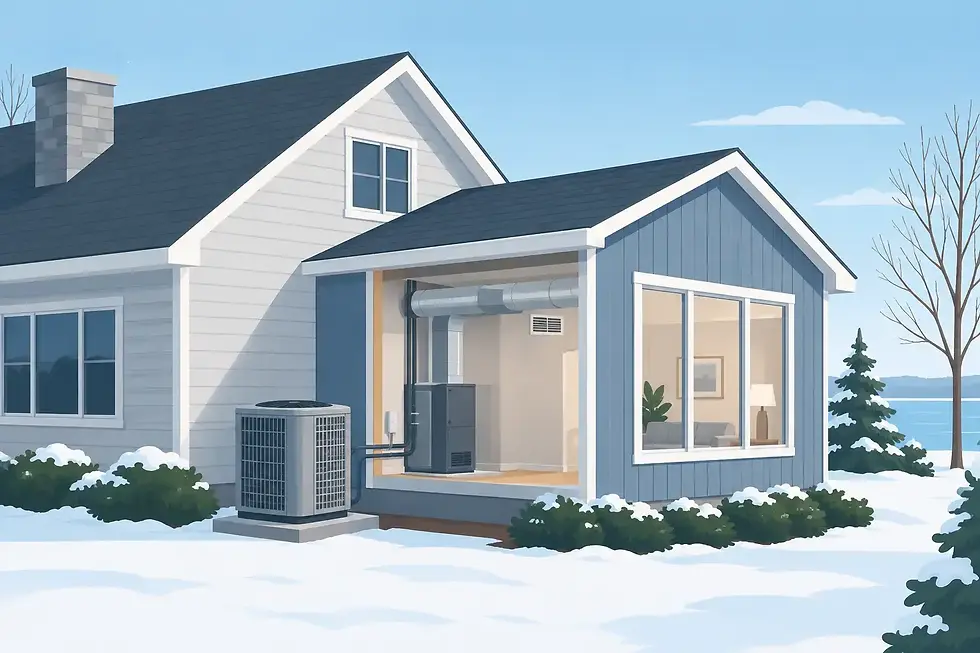
For many Michigan homes, a high-efficiency gas furnace remains the practical balance of longevity, strong winter performance, and replacement cost. When correctly sized and installed, it can deliver dependable heat for 15 to 20 years or more. Furnaces also work with central air conditioners or heat pumps through the same duct system, making them a flexible choice for complete comfort.
Modern high-efficiency furnaces contain more sophisticated components than older models. That supports better efficiency and comfort control, but it also makes professional installation and maintenance especially valuable. Proper venting, condensate drainage, airflow, and gas connections all affect long-term performance.
Central Air Conditioner and Air-Source Heat Pump
A central air conditioner typically lasts 12 to 18 years. Heat pumps often fall within a similar range, though they may experience more annual operating hours because they provide both heating and cooling. In Michigan, a cold-climate heat pump can offer highly efficient heating during milder weather and pair well with a furnace for backup heat during the coldest periods.
Outdoor units face rain, snow, ice, leaves, lawn debris, and wide seasonal temperature changes. That exposure helps explain why they generally do not last as long as indoor heating equipment. Still, the right system can provide many years of efficient service when it is protected by proper installation, clear outdoor space, and routine maintenance.
Installation Has More Influence Than Many Homeowners Expect
Brand and efficiency ratings matter, but installation quality is one of the biggest factors in HVAC longevity. A system should be selected using a professional load calculation, not a guess based on the size of the old equipment or the home’s square footage alone.
An oversized furnace or air conditioner may heat and cool quickly, but it can cycle on and off too often. That short cycling increases component wear, leaves rooms less comfortable, and can make humidity control more difficult in summer. An undersized system may run excessively and struggle to maintain indoor temperatures during severe weather.
Ductwork also deserves attention during a system changeout or remodeling project. Leaky, undersized, or poorly balanced ducts force equipment to work harder than necessary. In homes with renovated additions, finished basements, or changed room layouts, the original duct system may no longer match the home’s needs. Addressing airflow during installation protects both comfort and equipment life.
How to Help Your HVAC System Last Longer
No HVAC system is maintenance-free, but homeowners can prevent many avoidable problems. Change or clean air filters on schedule, especially during heavy heating and cooling use. A restricted filter reduces airflow and puts extra strain on the blower motor, furnace, air conditioner, or heat pump.
Keep outdoor units clear of leaves, grass clippings, snow buildup, and stored items. The unit needs open space to move air effectively. Do not cover an operating heat pump in winter, since it must draw air through the coil to provide heat.
Annual professional maintenance is another worthwhile investment. A technician can inspect electrical connections, refrigerant performance, drainage, combustion safety, heat exchangers, burners, and airflow before small issues become expensive failures. Boilers also benefit from regular inspection of water pressure, safety controls, and circulation components.
Just as important, avoid waiting for total failure when a system is already showing its age. Rising utility bills, frequent repairs, uneven temperatures, unusual sounds, and difficulty keeping up during extreme weather are signs that it may be time to plan a replacement. A planned project gives you time to compare efficient options and design the system around your home instead of making a rushed choice.
Choose the Longest-Lasting System for Your Home
The answer to what HVAC system lasts longest depends on what you mean by the full system. Geothermal leads for maximum long-term durability. Boilers can provide the longest life among conventional heating equipment. Gas furnaces offer a dependable, practical service life for many homes, while central air conditioners and heat pumps typically need replacement sooner because they work outdoors year-round.
For a Michigan homeowner, the best long-lasting system is one that is accurately sized, professionally installed, and designed for the way the home is used. Four Seasons Heating & Cooling helps homeowners make those decisions with efficient residential solutions built for reliable comfort through every season. A thoughtful system design today can make the next 15 to 25 years of home comfort far more predictable.


Comments