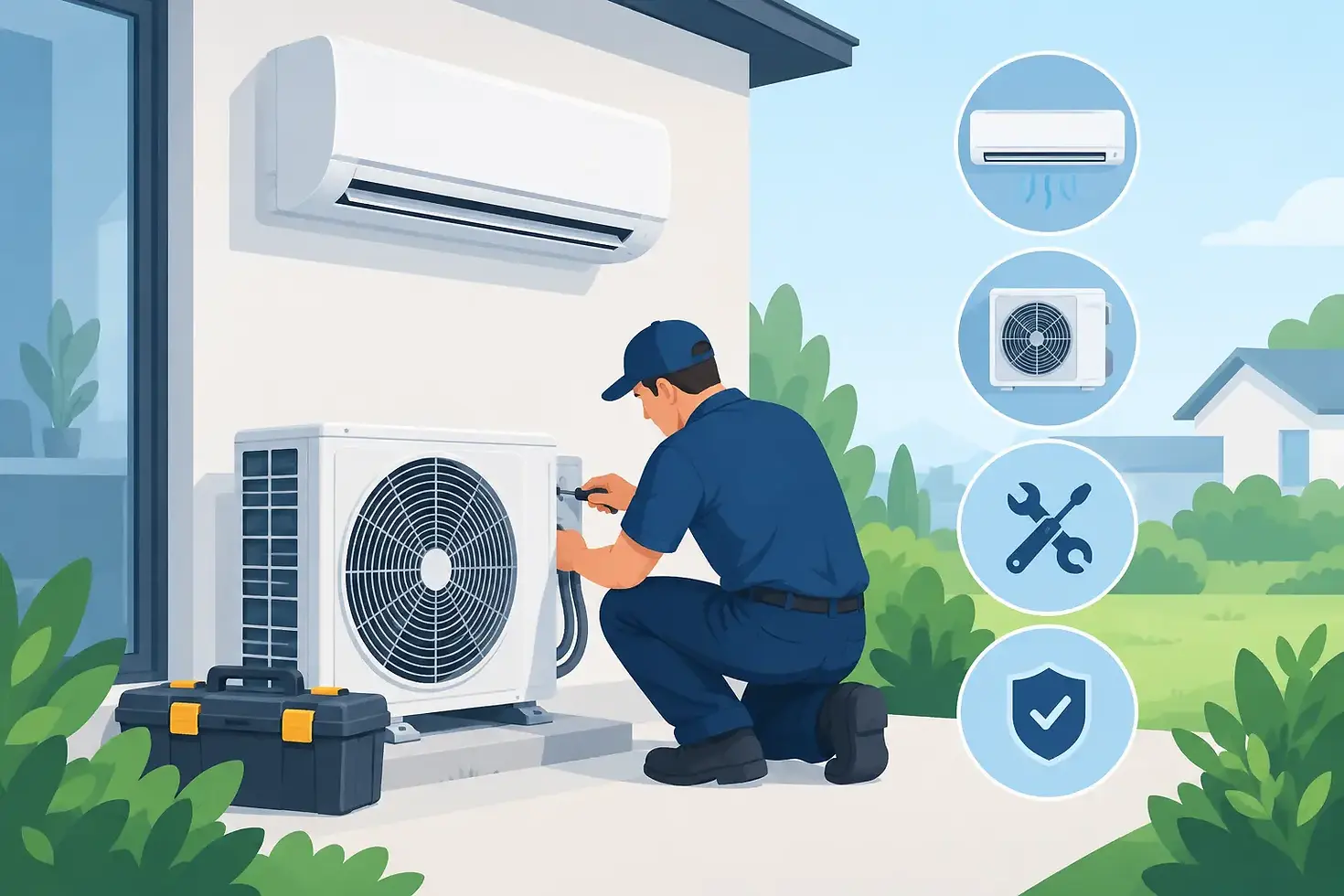
Air Conditioning Installation Buyer Guide
A new air conditioner can feel like a simple replacement until you compare equipment ratings, system sizes, ductwork needs, and installation proposals. This air conditioning installation buyer guide helps Michigan homeowners focus on the decisions that protect comfort, efficiency, and long-term home performance.
Your cooling system has to do more than lower the temperature on a few hot July afternoons. It must manage humidity, work with your existing heating equipment, fit the home’s layout, and operate dependably through years of seasonal changes. The right choice is rarely just the unit with the highest advertised efficiency rating or the lowest initial price.
Start With How Your Home Uses Comfort
Before comparing brands or model numbers, consider the project itself. A system changeout in an established home has different requirements than HVAC planning for a new build or a major remodel.
For a replacement, the existing equipment offers useful clues. Has the upstairs always been warmer? Does the system run constantly on humid days? Are some rooms uncomfortable even when the thermostat setting seems right? Replacing an old condenser with a similar-size new one may not solve those issues if the original system was oversized, undersized, or paired with inadequate ductwork.
New construction gives homeowners and builders an opportunity to plan the complete comfort system around the home. Equipment location, return-air pathways, duct routing, insulation levels, window placement, and room use should all be considered before walls are closed. A well-designed system is easier to live with and easier to service.
Remodeling calls for the same level of planning. Adding a sunroom, finishing a basement, opening a floor plan, or building an addition changes the home’s cooling load. The existing air conditioner may have enough capacity, or the new space may need duct modifications, zoning, or separate equipment. It depends on the design, not the square footage alone.
Choose the Right Type of Air Conditioning System
Most Michigan homes use a central split system, with an outdoor condensing unit and an indoor coil connected to a furnace or air handler. This is often the practical choice when the home already has ductwork and needs a straightforward cooling upgrade.
A heat pump is another strong option. It provides air conditioning in summer and can also provide efficient electric heat during milder weather. In a Michigan home, a heat pump is commonly paired with a furnace in a dual-fuel arrangement. The system can use the heat pump when conditions are favorable and the furnace when outdoor temperatures call for it. This approach can improve year-round efficiency, though equipment cost and electrical requirements should be part of the conversation.
Ductless mini-splits can make sense for additions, converted garages, bonus rooms, or homes where extending ductwork is difficult. They offer room-by-room control, but indoor units must be placed thoughtfully, and they are not automatically the best answer for every whole-home project.
The best system type is the one that suits the home’s layout, existing infrastructure, comfort priorities, and heating plan. A professional recommendation should explain why a particular approach fits rather than simply presenting the equipment that is easiest to install.
Air Conditioning Installation Buyer Guide: Sizing Matters
An air conditioner that is too large can cool the house quickly but shut off before it removes enough humidity. That can leave rooms feeling cool and clammy while increasing short cycling and equipment wear. A system that is too small may run for long periods and struggle to maintain comfort during peak heat.
Proper sizing starts with a load calculation. This evaluates factors such as the home’s square footage, insulation, windows, orientation, ceiling heights, air leakage, occupancy, and local design temperatures. It is more accurate than using the capacity of the old unit or a simple rule based on square footage.
Ask how the contractor will determine system size. A clear answer should include a home-specific evaluation, not a guess from the driveway. This is particularly valuable after window replacements, attic insulation upgrades, renovations, or changes to the home’s layout. Improvements that reduce heat gain may mean the new system should be smaller than the old one.
Sizing also involves the indoor equipment. The outdoor air conditioner, indoor evaporator coil, blower, and duct system need to work as a matched system. A high-efficiency outdoor unit cannot deliver its intended results if it is paired improperly or starved for airflow.
Compare Efficiency Without Chasing a Number
Air conditioner efficiency is measured by SEER2, a rating that reflects seasonal cooling performance. Higher SEER2 equipment generally uses less electricity, but the best rating for your home depends on how long you expect to stay, your budget, comfort goals, and the condition of the rest of the system.
For some homeowners, a dependable mid-efficiency system with correct sizing and careful installation is the most sensible investment. For others, higher-efficiency equipment may be worthwhile because it offers lower operating costs, variable-speed performance, quieter operation, or improved humidity control.
Variable-capacity and two-stage systems can adjust output more gradually than a single-stage unit. That often means longer, lower-speed cycles that support more even temperatures and better moisture removal. The trade-off is a higher upfront cost and, in some cases, more advanced controls. A qualified residential HVAC contractor can help determine whether those benefits fit the home and the household.
Efficiency should also be evaluated beyond the equipment label. Duct leakage, poor return-air design, weak attic insulation, and an improperly configured thermostat can all waste energy. Installation quality is not a small detail. It is central to the system’s real-world performance.
Look Closely at Ductwork, Airflow, and Electrical Needs
A replacement quote should account for the conditions around the equipment, not only the condenser outside. Ductwork needs enough capacity to move the required air to each room and back to the system. Restricted returns, undersized ducts, disconnected runs, and poorly balanced supply registers can create hot rooms, excessive noise, and reduced equipment life.
Older homes may also need electrical updates to support new equipment safely. If you are considering a heat pump, panel capacity and circuit requirements should be reviewed early. These details are easier to address before installation day than after a new system has been selected.
Drainage matters, too. The indoor coil removes moisture from the air, and that condensate must drain reliably. A properly planned installation includes safe drain routing and appropriate protection against overflow where needed.
What a Thorough Installation Proposal Should Cover
A useful proposal makes it easier to compare options fairly. It should identify the proposed equipment and explain the work included, such as removal of existing equipment, new refrigerant lines or line-set evaluation, coil replacement, electrical work, thermostat compatibility, duct modifications, permits, and start-up testing.
Do not assume every quote includes the same scope. A lower price may leave out necessary work, while a more complete proposal may address airflow, drainage, electrical needs, and commissioning from the start. Ask what assumptions are being made about the existing furnace, coil, ducts, and refrigerant piping.
You should also understand warranty coverage and who will register the equipment if registration is required. Manufacturer parts warranties and contractor labor coverage are different, so ask for clear details. A dependable contractor should explain what is covered and what routine maintenance will help protect the system.
Questions Worth Asking Before You Buy
A confident homeowner does not need to become an HVAC technician. A few direct questions can reveal whether the recommendation is based on the home rather than a generic sales pitch:
How will you calculate the cooling load and choose the system size?
Is the proposed indoor coil and outdoor unit an approved match?
Will you inspect ductwork, return airflow, and condensate drainage?
What efficiency, comfort, and sound-level differences separate these options?
Which installation tasks, permits, and start-up tests are included in the quote?
How will the system be checked after installation for airflow, refrigerant charge, and operation?
The answers should be understandable. Technical expertise is valuable, but homeowners deserve clear explanations of how a recommendation affects their comfort, energy use, and investment.
Plan for Comfort After Installation
The installation day is not the finish line. The system should be commissioned correctly, with refrigerant charge, airflow, electrical connections, thermostat operation, and temperature performance checked before the project is complete. Regular filter changes and professional maintenance help preserve efficiency and catch small issues before they become costly repairs.
For Michigan homeowners, the strongest buying decision is one built around the home itself: its construction, its airflow, its seasonal demands, and the way your family lives in it. Four Seasons Heating & Cooling LLC can help turn those details into a tailored cooling plan, so your next system feels less like a purchase and more like dependable comfort when you need it most.

Comments