Electric Furnace Versus Gas Furnace for Homes
A Michigan winter does not leave much room for a heating system that is merely adequate. When choosing between an electric furnace versus gas furnace, homeowners need to look beyond the equipment price and consider how the system will perform through long cold stretches, what utilities are available, and how the home itself holds heat.
Both systems can provide dependable residential comfort when they are properly selected and installed. The better choice depends on your home, your energy costs, your renovation or construction plans, and your long-term priorities.
Electric Furnace Versus Gas Furnace: The Core Difference
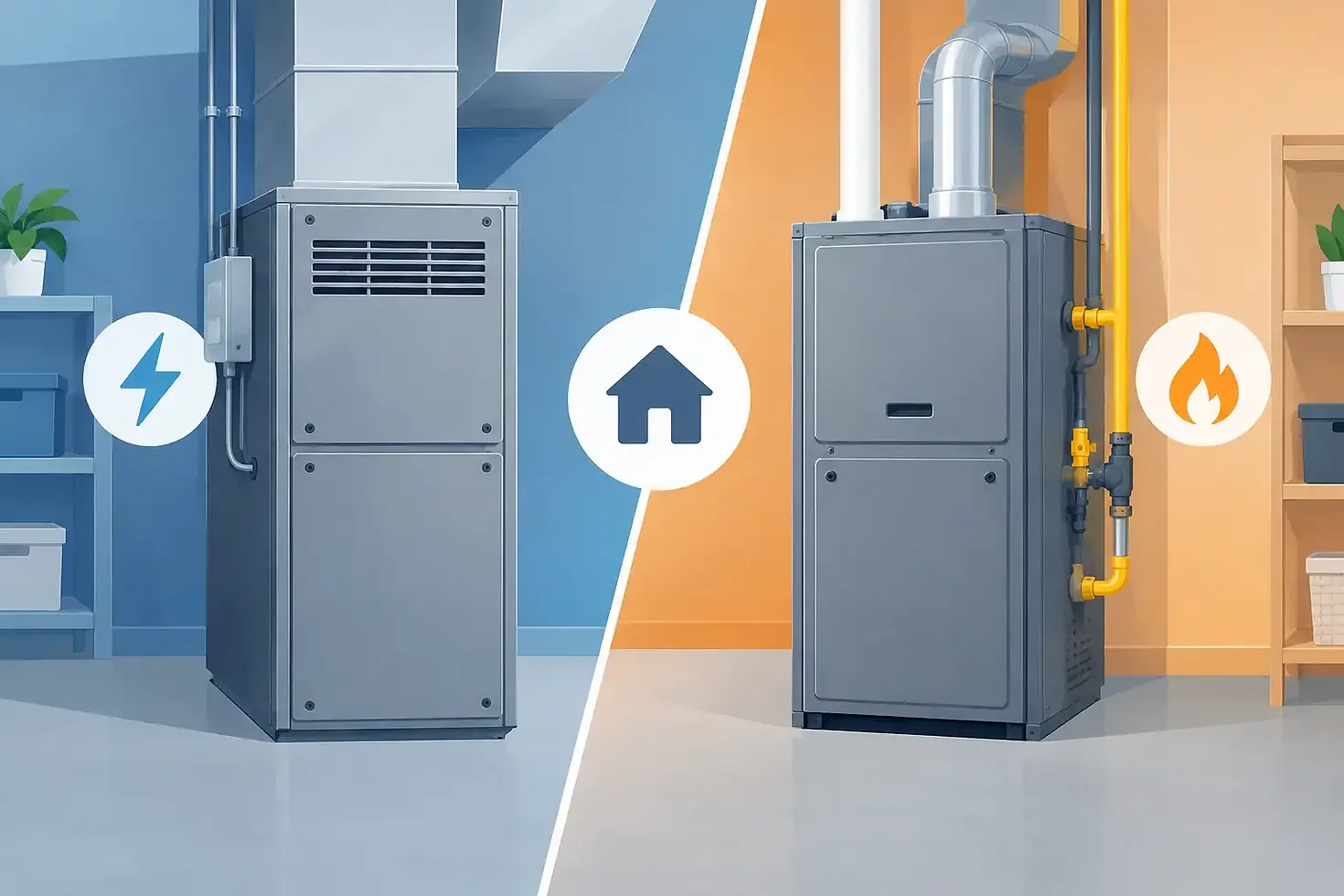
A gas furnace creates heat by burning natural gas or propane. A heat exchanger transfers that heat to the air moving through the ductwork, while combustion gases are safely vented outside. Gas furnaces are common throughout Michigan because natural gas is widely available and can deliver strong heat during very cold weather.
An electric furnace uses electric resistance heating elements, similar in principle to the elements inside an electric oven. As air passes across those elements, it warms and circulates through the home. There is no combustion, gas line, or venting system involved.
The distinction affects more than the fuel source. It influences operating cost, installation requirements, maintenance needs, and how easily the system fits into a new build, remodel, or replacement project.
Upfront Installation Cost and Existing Equipment
An electric furnace often costs less to purchase and install than a comparable gas furnace. It does not require a gas connection, vent pipe, combustion air setup, or condensate drainage associated with high-efficiency gas equipment. For a home without natural gas service, that can make electric heat a practical option.
However, the furnace itself is only one part of the project. An electric furnace may require a substantial electrical upgrade if the existing service panel cannot support the added load. A contractor should confirm panel capacity, wiring requirements, and available breaker space before recommending the equipment.
A gas furnace usually has a higher installed cost, particularly when gas service or venting must be added. But if a Michigan home already has a gas meter, gas lines, and appropriate venting in place, a gas furnace replacement may be straightforward. In many system changeouts, reusing compatible infrastructure helps control installation costs.
For new construction and major remodels, planning the heating system early matters. Duct routing, mechanical-room space, electrical capacity, fuel access, and ventilation all need to work together. Making those decisions before walls are closed is far less disruptive than trying to solve them later.
Efficiency Is Not the Same as Operating Cost
Electric furnaces are essentially 100% efficient at the point of use. Nearly all the electricity they consume becomes heat inside the home. That sounds like a clear advantage, but it does not automatically mean electric heat will cost less to operate.
Electricity typically costs more per unit of delivered heat than natural gas in many Michigan communities. As a result, an electric furnace can have higher monthly winter operating costs, even though it does not lose heat through a combustion vent.
Gas furnace efficiency is measured by Annual Fuel Utilization Efficiency, or AFUE. A 95% AFUE furnace converts about 95% of its fuel into usable indoor heat over a heating season. High-efficiency gas furnaces are designed to capture more heat from combustion gases before they leave the home.
The right comparison is based on local utility rates, equipment efficiency, and the amount of heat your home needs. A well-insulated, compact home may have a different cost equation than an older home with air leakage, limited attic insulation, or uneven room temperatures.
A note about heat pumps
Homeowners sometimes use “electric furnace” to describe any electric heating system. A heat pump is different. Instead of creating heat with resistance elements, it moves heat from outside air into the home. Because it transfers rather than generates heat, a heat pump can be much more efficient during moderate weather.
For Michigan homes, a cold-climate heat pump may be paired with electric backup heat or a gas furnace. This dual-fuel approach can provide efficient heating during milder conditions and strong furnace heat when outdoor temperatures drop sharply. It is worth discussing during an HVAC upgrade, especially when cooling equipment is also due for replacement.
Winter Performance in Michigan Homes
Both furnace types can maintain comfortable indoor temperatures when properly sized. The key word is properly. A furnace that is too small may struggle during severe weather, while an oversized system can cycle on and off too frequently, reducing comfort and adding unnecessary wear.
Gas furnaces are often favored for their high heat output and fast recovery. They can quickly raise indoor temperature after a setback or when doors have been opening frequently during a busy winter day. For larger homes, older homes, and households that prefer consistent strong heat, this can be an important benefit.
Electric furnaces produce reliable heat as well, but they may operate longer to meet demand during the coldest periods. That is not inherently a problem. The concern is the cost of running resistance heat for extended hours when electricity rates are high.
Before selecting either option, a qualified residential HVAC contractor should perform a room-by-room load calculation. Square footage alone is not enough. Window quality, insulation levels, ceiling height, air leakage, home orientation, duct design, and the layout of finished or remodeled spaces all affect heating demand.
Maintenance, Safety, and Service Considerations
Electric furnaces have fewer mechanical and combustion-related components than gas furnaces. They do not have burners, a heat exchanger, or a flue system. Routine service still matters, including electrical connection checks, blower inspection, filter replacement, and airflow verification, but the maintenance profile is generally simpler.
Gas furnaces require regular professional inspection to confirm safe combustion, proper venting, burner operation, heat exchanger condition, and carbon monoxide protection. This is standard preventive care, not a reason to avoid gas heat. A professionally installed and maintained gas furnace is a dependable heating solution.
For either system, airflow deserves attention. A furnace cannot deliver efficient comfort through undersized, leaky, poorly designed, or obstructed ductwork. During a remodel, adding rooms or finishing a basement without addressing duct capacity can create cold spots and pressure problems throughout the home.
Which Furnace Is the Better Fit?
An electric furnace may make sense if your home does not have gas service, you want to avoid combustion equipment, or the project is small enough that electrical capacity is readily available. It can also be a practical backup or supplemental heating solution in certain applications.
A high-efficiency gas furnace is often the stronger fit for Michigan homeowners with access to natural gas who want manageable winter operating costs and powerful heating performance. It is especially worth considering for full-time residences, larger homes, and replacements where gas infrastructure already exists.
The best decision should also account for the age and condition of your air conditioner. If both heating and cooling equipment are nearing the end of their service life, replacing them as a matched system can improve comfort, airflow, equipment compatibility, and overall performance. A remodel or new construction project may also be the right time to consider zoning, upgraded filtration, humidification, or a heat pump strategy.
Four Seasons Heating & Cooling helps homeowners evaluate these decisions around the way their homes are built, used, and expected to perform. The goal is not to force every home into the same equipment choice. It is to design dependable indoor comfort that makes sense for Michigan weather and the years ahead.
A furnace decision is easiest when it starts with a clear picture of your home rather than a guess based on the old unit. A professional assessment can turn a major replacement into a confident investment in warmer winters, efficient operation, and comfort in every room.

Comments