
Is Ductless Cooling Right for Your Michigan Home?
A second-floor bedroom that never cools down, a finished basement that stays damp, or a new addition beyond the reach of existing ductwork can make the rest of the house feel beside the point. Ductless cooling gives Michigan homeowners a targeted way to solve those comfort problems without automatically extending or replacing a central duct system.
Often called a mini-split, a ductless system pairs an outdoor unit with one or more indoor air handlers. Each indoor unit delivers conditioned air directly to a specific room or zone. The result is room-by-room temperature control, quiet operation, and an installation approach that can be especially practical for remodels, additions, and homes with uneven cooling.
That does not mean ductless is the right answer for every home. The best choice depends on the space, the existing HVAC equipment, the home’s layout and insulation, and how your family actually uses each room. A professional design makes the difference between a useful comfort upgrade and equipment that never performs as it should.
How Ductless Cooling Works
A ductless system has two main components: an outdoor condenser and one or more indoor air handlers. Refrigerant lines and electrical wiring connect them through a small opening in an exterior wall. The indoor unit pulls in room air, removes heat, and returns cooled air to the space. Moisture is also removed during the cooling process, helping improve comfort on humid Michigan days.
Unlike a traditional central air system, ductless equipment does not rely on a network of supply and return ducts to move air throughout the home. Each indoor unit has its own thermostat or control, allowing occupants to set temperatures based on the needs of that room.
Many modern ductless heat pumps can provide heat as well as air conditioning. That feature can be valuable during Michigan’s spring and fall weather, when a full furnace cycle may not be necessary. For year-round heating, however, the equipment selection and cold-weather performance need careful review. A system designed only around summer cooling should not be assumed to meet a home’s winter heating needs.
Where Ductless Cooling Makes the Most Sense
Ductless cooling is not simply a substitute for central air. It is often a strong solution where conventional ductwork would be difficult, disruptive, or poorly matched to the space.
Home additions and remodeled spaces
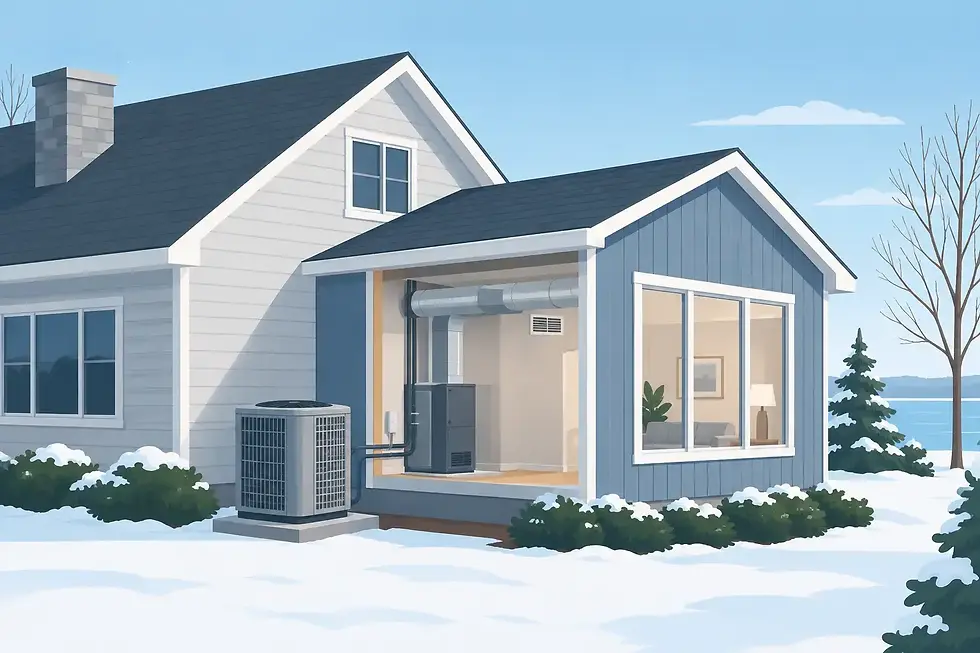
When a family room, primary suite, sunroom, garage conversion, or attic becomes finished living space, the existing system may not have enough capacity to serve it. Extending ductwork can sometimes work, but it may require opening walls and ceilings or can reduce airflow to the rest of the home.
A properly sized ductless unit can condition the addition independently. That gives the new space the capacity it needs without asking an older central system to do more than it was designed to handle.
Rooms with persistent hot spots
Upper-floor bedrooms, rooms with large west-facing windows, and areas over garages commonly run warmer than the rest of the house. Closing vents rarely solves the underlying issue and can create pressure and airflow problems elsewhere.
A ductless air handler can provide direct cooling where the load exists. It is particularly useful when the central system is generally reliable but one or two rooms remain uncomfortable during the hottest part of the day.
Homes without usable ductwork
Older homes may use boilers, radiant heat, or other systems that do not include forced-air ducts. Installing central air throughout the house can involve significant construction. Ductless equipment offers a lower-impact path to cooling, with indoor units placed in the areas where comfort matters most.
Basements and lightly used areas
Finished basements often need cooling and dehumidification even when the main floor feels comfortable. A ductless system can help make a lower level more usable for recreation, work, or guests. It can also make sense in a workshop, home office, or bonus room that is occupied at different times than the rest of the house.
The Comfort and Efficiency Benefits
The most noticeable benefit is control. Instead of cooling every room to the same setting, homeowners can adjust occupied zones according to use. A bedroom can be cooler at night while unused rooms are allowed to stay slightly warmer. This can reduce unnecessary runtime, particularly in homes where family members spend most of the day in a few main areas.
Ductless systems also avoid losses associated with poorly sealed, poorly insulated, or undersized ducts. That does not mean every ducted system is inefficient. Well-designed central HVAC systems remain an excellent choice for many Michigan homes. But when ductwork is difficult to add or existing ducts are part of the problem, ductless equipment removes that obstacle.
Modern inverter-driven compressors add another advantage. Rather than running only at full capacity and shutting off repeatedly, many ductless units can adjust output to match changing demand. This helps maintain steadier temperatures and can improve efficiency during long cooling periods.
Quiet operation is another practical benefit. Indoor units are designed for living areas, and outdoor equipment is generally less intrusive than older conventional systems. The exact sound level still depends on the model, placement, and installation quality, so the outdoor unit should be located with both household and neighbor comfort in mind.
Important Trade-Offs to Consider
Ductless equipment is visible inside the home. Wall-mounted air handlers are common, although ceiling cassettes and concealed options may be available for certain projects. Homeowners should consider placement early, especially during a remodel, rather than treating it as an afterthought.
The initial cost can also be higher than a simple central-air replacement for a single area. Multi-zone systems require careful planning, and each additional indoor unit adds equipment and installation work. The long-term value comes from targeted comfort, efficient operation, and avoiding major duct construction, but the financial case depends on the project.
Maintenance matters as well. Filters in indoor units need regular cleaning, and the system should receive professional service as recommended. A clean filter supports airflow, efficiency, and indoor air quality. Ignoring maintenance can lead to reduced performance, drainage issues, and avoidable service calls.
Finally, more zones do not automatically mean better design. Installing an indoor unit in every room may be appropriate for some homes, but other layouts are better served by a few strategically placed units or by a combination of ductless and central equipment. The goal is reliable comfort, not simply adding the most equipment.
Why Proper Sizing and Placement Matter
The biggest ductless cooling mistake is choosing equipment by square footage alone. A room’s cooling load is affected by ceiling height, insulation, windows, sun exposure, occupancy, appliances, air leakage, and the spaces around it. A south- or west-facing room with large glass areas can need substantially different capacity than a similarly sized interior room.
Oversized equipment can cool a space too quickly, leaving less time for moisture removal and creating temperature swings. Undersized equipment may run constantly without reaching the desired setting on peak summer days. Both outcomes are frustrating, and neither reflects the potential of the technology.
Indoor unit placement is equally important. Air needs a clear path to circulate through the room. Furniture, doors, ceiling geometry, and open stairways all affect performance. The outdoor unit also needs adequate clearance, a stable base, and a location that supports dependable service access.
For a new build or major renovation, planning ductless equipment before drywall and finishes are complete creates more options for line routing, condensate drainage, electrical requirements, and appearance. For an existing home, an experienced residential HVAC contractor can identify a clean installation path while protecting the home’s structure and finishes.
Ductless Cooling as Part of a Complete Home Plan
A ductless system can stand on its own, supplement an existing furnace and central air conditioner, or serve as part of a larger high-efficiency upgrade. The right approach starts with the home’s actual comfort concerns. Is the entire home uncomfortable, or is one area consistently out of balance? Is the existing system near the end of its service life? Will a remodel change the home’s heating and cooling load?
Those questions lead to better decisions than selecting equipment based on a single advertised feature. Four Seasons Heating & Cooling LLC helps homeowners evaluate ductless options in the context of the whole residential project, whether that means a new addition, a remodeled living space, or a targeted solution for a difficult room.
The right ductless design should feel uncomplicated once it is installed: the rooms you use stay comfortable, humidity is controlled, and your system fits the way your home is built and lived in. That is the standard worth planning for before the next Michigan summer arrives.


Comments