
Residential Heating and Cooling Systems That Fit
Michigan homes ask a lot of their HVAC equipment. A system may run hard through a subzero cold snap, then need to manage humidity and heat a few months later. Residential heating and cooling systems need more than a high-efficiency label to handle that workload well. They need to be sized correctly, planned around the home, and installed with the details that protect comfort in every season.
For a new home, a remodel, or a replacement project, the right decision starts with how the house actually performs. Square footage matters, but so do insulation levels, window placement, ceiling height, duct layout, household routines, and the condition of the existing equipment. A professional residential HVAC plan turns those variables into dependable indoor comfort rather than guesswork.
Start With the Home, Not the Equipment
A bigger furnace or air conditioner is not automatically a better one. Oversized equipment can heat or cool a home quickly, but short run cycles may leave rooms uneven, reduce humidity control, and create unnecessary wear. An undersized system can run constantly during extreme weather and still struggle to maintain the desired temperature.
Proper system selection begins with a load calculation. This evaluates the amount of heating and cooling a home needs based on its construction and exposure. A well-insulated ranch home with newer windows may need a very different solution than a two-story home with open living areas, large west-facing glass, or an unfinished basement.
This is especially important for Michigan remodeling projects. Adding a bedroom, finishing a basement, opening walls, or building an addition changes the way air moves and the way the home gains or loses heat. Simply extending an existing duct run may not provide the balance the new space needs. The project may call for redesigned ductwork, additional returns, zoning, or a separate comfort solution for the addition.
The Core Parts of Residential Heating and Cooling Systems
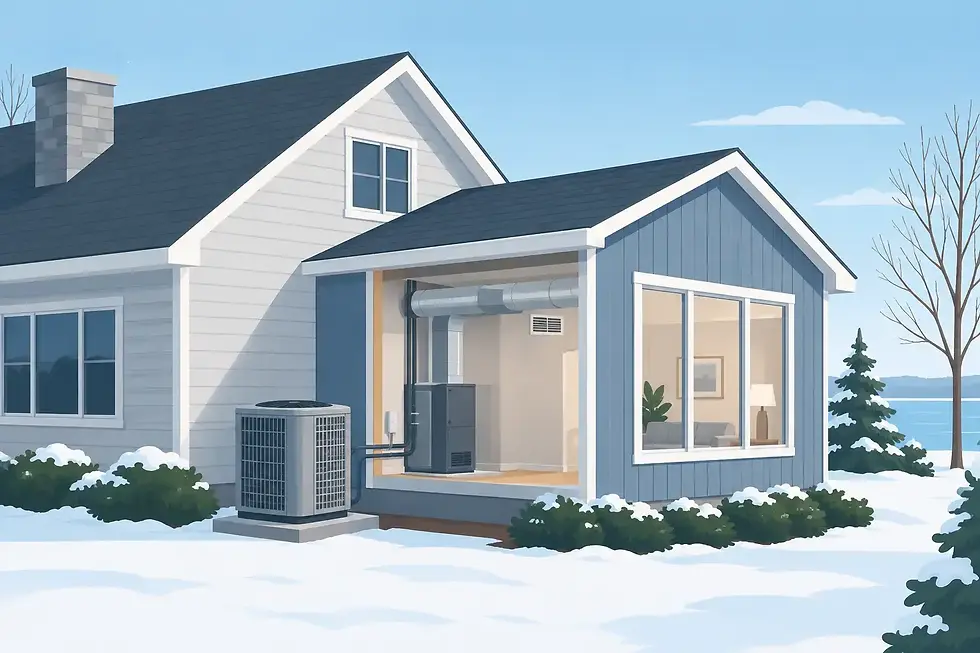
Most homes rely on a combination of indoor and outdoor equipment that works together as one system. The best setup depends on the home, the fuel source, the budget, and comfort priorities.
Furnaces and air conditioners
A gas furnace paired with a central air conditioner remains a practical choice for many Michigan homes. The furnace provides reliable heat during the coldest weather, while the air conditioner manages summer temperatures. Modern high-efficiency furnaces use less fuel than older equipment, and variable-speed blower motors can improve airflow, quiet operation, and temperature consistency.
Central air conditioning efficiency is commonly measured by SEER2 ratings. Higher ratings can reduce cooling energy use, but the best value is not always the highest number available. The cost of the equipment, expected cooling demand, duct condition, and length of time a homeowner plans to stay in the home all affect the right choice.
Heat pumps and hybrid systems
Heat pumps provide both heating and cooling by moving heat rather than creating it through combustion. Cold-climate heat pumps have become a strong option for Michigan homeowners, particularly in efficient homes or projects moving toward electric heating.
A heat pump can operate on its own or alongside a gas furnace in a dual-fuel arrangement. In a hybrid system, the heat pump handles much of the milder heating weather, while the furnace takes over when temperatures drop far enough that gas heat is the more effective choice. This approach can offer efficient year-round performance, though the right balance depends on utility costs, insulation, and the home’s heating load.
Ductwork, thermostats, and airflow
The equipment gets most of the attention, but ductwork and controls strongly influence the result. Leaky, undersized, poorly routed, or unbalanced ducts can waste conditioned air and leave certain rooms uncomfortable. A new high-efficiency furnace connected to poor ductwork will not deliver its full potential.
A properly planned system includes enough supply vents to deliver conditioned air and enough return paths to bring air back to the equipment. Smart thermostats can add scheduling and monitoring features, but they cannot correct an airflow problem. Comfort starts with sound design and installation, then the thermostat gives homeowners easier control.
What Efficiency Means for Your Home
High-efficiency equipment can lower energy use, but efficiency should be considered as a complete system outcome. Equipment ratings are useful comparisons, yet installation quality has a major effect on actual performance. Refrigerant charge, combustion setup, electrical connections, drainage, airflow, duct sealing, and commissioning all deserve close attention.
For heating equipment, AFUE measures how efficiently a furnace converts fuel into heat. A higher AFUE rating means less fuel is lost through the venting process. For heat pumps, HSPF2 helps compare heating efficiency, while SEER2 measures cooling efficiency. These ratings can guide the conversation, but they should not replace a home-specific recommendation.
A homeowner replacing a 20-year-old system may see meaningful improvements from modern equipment even without choosing the highest available ratings. Better blower technology, tighter duct connections, correct sizing, and reliable controls can make the home feel noticeably more consistent. The goal is efficient comfort that makes sense for the project, not paying for features that do not match the home’s needs.
Planning for New Construction, Remodels, and Changeouts
Each residential HVAC project starts from a different point. Treating them the same is how preventable comfort issues show up after the work is finished.
New construction requires early coordination
In a new home, HVAC planning should happen before framing and finishing decisions limit the options. Equipment location, duct routes, return-air placement, bathroom exhaust, kitchen ventilation, and thermostat locations all need room in the plan. Early coordination with the builder helps preserve ceiling height, avoid awkward soffits, and create a cleaner installation.
New construction is also the best opportunity to design for future comfort. A planned basement finish, bonus room, or home office may affect how the system should be laid out from day one. Building in the right capacity and duct access can prevent expensive modifications later.
Remodels need a fresh look at airflow
Remodeling often improves a home’s appearance while changing its comfort needs. New insulation and windows can reduce heating loads. Removing walls can alter air circulation. A finished attic, addition, or converted garage can introduce areas that the original system was never designed to serve.
The solution might be an updated central system, a ductless unit for a difficult area, or carefully planned zoning. There is no universal answer. The right approach depends on how the remodeled space will be used and whether the existing equipment has the capacity and duct layout to support it.
System changeouts should not be automatic swaps
Replacing failed equipment is often urgent, but a like-for-like replacement is not always the best move. The original system may have been oversized, poorly balanced, or selected before insulation and window improvements were made. It may also have hidden duct issues that contributed to the equipment’s early failure.
Before choosing a replacement, homeowners should consider the age and condition of the ductwork, recurring hot or cold rooms, energy bills, indoor humidity, and changes made to the home. A thorough evaluation provides a clearer path than selecting equipment based only on the old unit’s capacity.
Signs Your System May Need an Upgrade
Age alone does not decide when to replace HVAC equipment, but it is a useful signal. Furnaces and air conditioners that require frequent repairs, run loudly, struggle to maintain temperature, or create rising utility costs deserve attention. Uneven rooms, poor humidity control, excessive dust, and cycling on and off quickly can also point to system or airflow problems.
Homeowners should also think ahead when planning a major renovation. Waiting until after walls and finishes are complete can make HVAC improvements more disruptive and expensive. Evaluating comfort needs during the planning stage gives the project more options.
Choose Installation Expertise, Not Just a Brand Name
Equipment quality matters, but installation determines how well that equipment serves the home. A dependable contractor evaluates the full project, explains the choices in plain language, and recommends a system sized for the house rather than a one-size-fits-all replacement.
For homeowners in Michigan, Four Seasons Heating & Cooling LLC focuses on residential installations that support efficient operation and reliable year-round comfort. From new construction to remodels and system changeouts, the objective is the same: a climate-control solution that fits the home and performs when the weather is at its most demanding.
A well-designed HVAC system should fade into the background of daily life. Rooms stay comfortable, airflow feels consistent, and the home is ready for the next Michigan season without asking the equipment to do more than it was built to handle.


Comments